Privacy Policy
Cookie Policy
Legal Notice
CLAUDIO GIULIANELLI - Italy
CONTACTS: claudiogiulianelli@gmail.com Website: www.claudiogiulianelli.it
phone: +39 3930402949
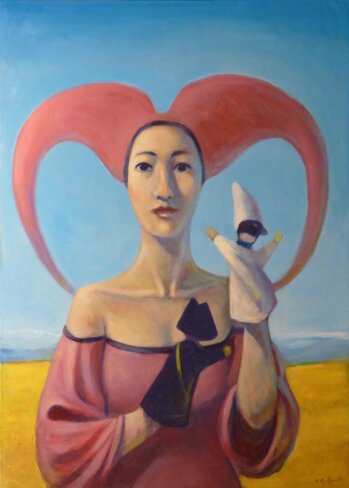
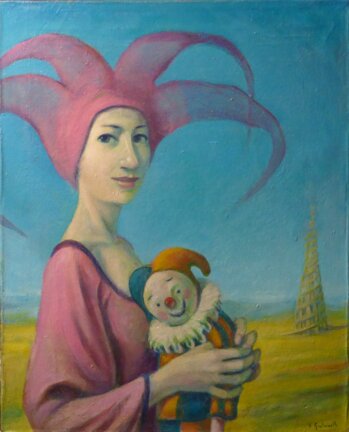
A beautiful love
The Secret among Secrets
acrylic and oil on canvas mounted on panel cm 40 x 50
acrylic and oil on canvas 50 x 70 cm
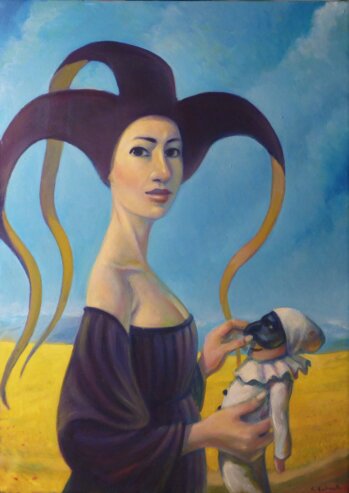
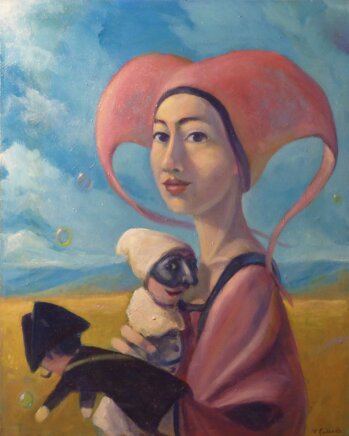
The landlady
The world I want
oil on canvas cm 50 x 70
acrylic and oil on canvas cm 40 x 50 Spain private collection
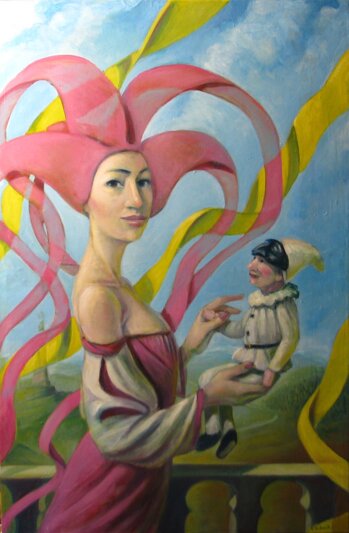
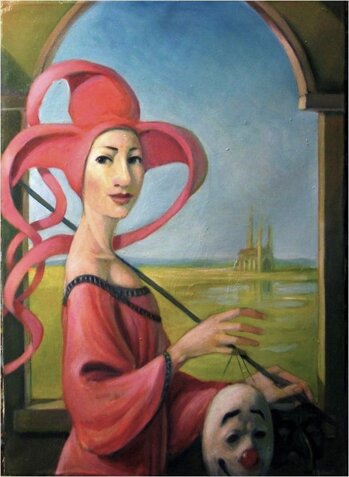
Dialogues with Nature
A beautiful love
acrylic and oil on canvas cm 50 x 70
acrylic and oil on canvas mounted on panel cm 57 x 87
HIS BIOGRAPHY
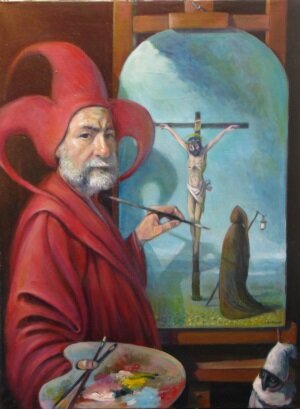
Claudio Giulianelli was born in Rome in 1956. He attended a chemistry-oriented institute, but his strong passion for art (especially ancient art) led him to deepen his technique and study of painting through careful observation of the Masters’ works, together with reading texts on painting technique.
Books on Caravaggio and those on the Flemish painters are his daily travel companions.
Meeting painters such as Delfo Previtali and Guido Razzi further refined his way of painting.
Over time he travelled across half of Europe to see the paintings of the Great Masters up close, nurturing the feelings those masterpieces left in him.
In 1992 he moved to Corchiano, a small town of very ancient Etruscan origins, where he lives and works in via Contrada Fratta snc 01030 Corchiano Vt. Together with other painters he founded the Mega Art Association, which brings together the most interesting artists working on the web, whose website is www.megaart.it .
MAIN NATIONAL AND INTERNATIONAL EXHIBITIONS ATTENDED
MOST IMPORTANT INTERNATIONAL EXHIBITIONS
1975 Group show, “Il Camino” Gallery - Rome
1975 Group show, Palazzo dei Congressi – Rome
1978 Group show at the Art Center “Nuova Figurazione” – Rome
1983 Expo Tevere – Rome
1984 Group show, Palazzo Cateani – Cisterna (LT)
1985 Group show, “Leonardo da Vinci” Gallery – Rome
1985 Expo Arte Bari
1985 National Exhibition of Figurative Arts - Foligno
1985 “La Tavola nel Mondo” Palazzo dei Congressi, EUR Rome
1987 3rd National Review - Anzio - Rome
1987 “Art Today in the Angevin Kingdom” - Cittaducale, Rieti
1987 Living Nativity - Rivisondoli
1987 Lions Club Prize, City of Leonessa (Plaque, 4th Prize)
1987 First meeting of artists of Alto Sangro (Plaque)
1988 “Art Against AIDS” Ministry of Cultural Heritage and Environment - Monumental Complex of S. Michele a Ripa - Rome
1988 1st Biennial of Sacred Art - Fermo
1988 International Mail Art Exhibition - Circolo Sirena - Francavilla al Mare
1988 4th National Review of Figurative Arts - Perugia
1988 National Painting Competition, City of Giulianova (Cup)
1988 Palazzo Mazzacurati - Bologna
1988 S. Giovanni Leonardi Prize (3rd Prize) - Rome
1989 20th International Painting Prize, Civitella Roveto
1989 National Prize of Marian Sacred Art - Sala del Bramante, Rome
1989 100 Nativity Scenes - Sale del Bramante, Rome
1990 International competition for the design of a stamp for the Japanese Post Office - Tokyo
1990 “Golden Brush” Prize - Sulmona
1991 Landing Week - Hall of Mirrors, Anzio
1991 International exhibition on a railway theme - Milan
1991 Dante Alighieri Prize - Protomoteca Hall, Capitoline Hill, Rome
1991 100 Nativity Scenes - Sala del Bramante, Rome
1996 Group show, S. Agostino Cultural Center - Rome
2005 Theleton BNL
2006 Selection, La Corugna Museum, Spain
2006 Re-opening Art Party, Young Museum, International Center of Modern Art, Palazzo Ducale, Revere (MN)
2006 “Woman Animal” Group show, Church of S. Francesco--Capranica (VT)
2006 La Notte Bianca--Rome at Neoartgallery
2006 Group show, Palazzo Medici Clarelli – Rome
2006 Group show, Laboratorio Emozionale – Rome
2006 Istanbul International Art Fair
2006 Arte Lanterna - 3rd Contemporary Art Meeting, Carrozzeria Rizieri—Pontedera, Pisa
2006 Teatro Piccolo Eliseo - Rome - Group show organized by Tartaglia Arte
2007 “From the Web to the Canvas” event organized by “Carta e Matita” - Milan, Spazio Tadini
2007 Lineadarte — Group show 20 x 20 - Naples
2007 “The Reality of the Invisible” Tendastrisce — Rome
2007 Art Exhibition “Salamanca” - Spittal Drau Castle—Austria
2007 Magical Art - Kedesh Workshop, Treviso
2007 Oltreandiamo—painting prize—Marina di Giocosa—RC
2007 La Città del Cinema group show, Mega Art, Tartaglia Arte, Isola Tiberina - Rome
2007 Second extraction quarry, Santa Barbara, Naples
2008 - Giuseppe Garibaldi, man of freedom - Historical Museum - former convent of S. Francesco - Bergamo
2008 - Giuseppe Garibaldi, hombre de la libertad, hombre de la humanidad -
Sala de Ceremonias de la Intendencia Municipal de Montevideo - Uruguay
2008 Library of the Chamber of Deputies, “the artist’s book and water” Rome
2008 Napoli Officina Creativa, Linea d'Arte 20 x 20
2008 Excelsior Palace Hotel, Open Art Aurum – Taormina
2008 Carré d’Artistes Art Gallery – Lille, France
2008 Scent of a Woman - Profumo di Donna - Palazzo dei Sette - Ovieto (TR)
2008 RaccontiArte Permanent Intercultural Gallery - group show, European Union
2009 Museum Mail Art Exhibition - Palazzo Ateneo - Montevideo, Uruguay
2009 Library of the Italian Parliament - World Book and Copyright Day
2009 Carré d'Artistes Art Gallery, Paris, France
2009 Galleria Piccolo Angelo - Viterbo
2009 Terna Prize 2
2009 Palazzo dell'Areonautica Civile - Beijing, China
2009 Art Gallery “Le Ali di Mirna” - Mesagne (BR)
2009 Art Center “Casa Tani” - Rovereto (TR)
2009 The Colors of Divine Love - Sanctuary of the Divine Love, Rome
2010 International Art Fair Stuttgart-Sindelfingen (Germany)
2010 1st Int’l Competition Bruno Buozzi, Hotel Aran Mantegna, Rome (out of competition)
2010 Agrigento Art Fair
2010 Only Italy Contemporary Art Exhibition - Teatro Stabile of Hangzhou (China)
2010 13th New West Lake Art Fair, Contemporary Art Exhibition at the Peace Exibition Center in Hangzhou (China)
2010 Auction house “Il Babuino” in support of the Abruzzo earthquake victims
2010 Contemporaneamente - Le Ali di Mirna Gallery - Mesagne (BR)
2010 The Colors of Form - De Nittis Foundation, Barletta (BA)
2010 International Prize Italia Arte - Villa Qualino - TO
2010 Carousell do Louvre - Paris
2010 EXPOMUNDIAL SOCCER 2010, Flamingo Road Gallery, Bogotá, Colombia
2010 Redeemed Time, piano nobile of the Norman-Swabian Castle of Mesagne (BR)
2010 Int’l Prize “Patrizi e Plebei” OAD Int’l Center Gallery, Via del Corso, Rome
2010 Art Center “Casa Tani” At Dusk - Rovereto (TR)
2011 Carrè d'Artiestes - Bordeaux, France
2011 Art Gallery “La Suburra” - Rome
2011 Carrè d'Artistes - Toulouse, France
2011 West Lake Art Fair- Hangzhou (Shanghai) - China
2011 Don's Sleep Latino Art Museum - Pomona, Los Angeles- USA
2011 Art Gallery “Le Ali di Mirna” Mesagne (BR)
2011 International Prize City of Corchiano (VT)
2011 Arte Padova - Int’l Art Fair
2012 Cultura Contact - San Vidal Art Center - Venice
2012 Cultural Contact Il Labirinto - Alatri (FR)
2012 Carré d'Artistes, Lyon France
2012 Redstar Cultural Center, Hangzhou - Shanghai - China
2012 54th Venice Biennale - Italy Pavilion - Turin, curated by Vittorio Sgarbi
2012 Cultural Contact - Archaeological Museum of Santa Severa, Rome
2012 76th Fiera del Levante - Bari
2012 4th International Competition of Contemporaney Art of GEMLUC - Monte-Carlo, Principality of Monaco
2012 award ceremony “Model for Art 2012” - Belgirate (VB)
2012 2nd Edition International Art Competition, City of Corchiano Prize (out of competition)
2013 Marathon Village - Mega Art on bulimia and anorexia
2013 Group show by Mega Art artists - La Bitta Art Center, Rome
2013 3rd Edition International Art Competition City of Corchiano Vt
2014 Human Eventart Space Pergine Valsugana Tn
2014 1st Competition "The Christmas plate" - out of competition - Bishop's Cloister, Civita Castellana Vt
2015 Simultanea Gallery Art Spaces - Florence
2015 Carré d'Artistes - Rome
2015 Le Dame Art Gallery - London by Useum
2015 Dialogue of Death - Cript Gallery London
2015 Portraits of the Popes Exhibition - Madonna del Pozzo - Rome
2015 Cypress College Art Gallery - Los Angeles USA
2016 Art sketch for an allegorical float Museo Michetti - Francavilla al Mare Ch
2016 Art Nation Miami - USA
2016 International Art Fair Forlì
2016 International ArtExpo New York City USA
2016 In nomine Sancti Nicolai - Bari Italy
2016 Jadite Galleries - New York - USA
2016 International Art Fair JiNan China by ArtBank
2016 International Art Fair Beijing (Peking) - China by ArtBank
2016 Espace Art Galllery - Brussels Belgium
2016 International Art Fair JiNan China by ArtBank
2016 International Art Fair Beijing (Peking) - China by ArtBank
2016 Espace Art Galllery - Brussels Belgium
2016 - 26th International Fair Istanbul by Neoartgallery
2016 - Innsbruck International Fair
2017 - Exclusive Art Gallery Teano Cs
2017 IN SACRAMENTA MANENT Contemporary artists in dialogue on the Sacred with Aligi Sassu Villa Filippini - Besana BRIANZA
2017 - Now That`s What I Call Art – LAURA I. GALLERY - London
2017 Art Fair Tuyap Turkey
2017 Art Fair Abu Dhabi UAE
SOLO - SOLO EXHIBITIONS
1980 Teatro dei Dioscuri - Rome
1981 IWS Gallery Rome
1983 Michelangelo Gallery Bari
1984 Esp Center Rome
1986 Art Center "La Bitta" Rome
1989 Orsini Palace Morlupo
1990 Corsini Pavilion Villa Pamphili Rome
1991 Art Center "La Bitta" Rome
1992 IMI CSA Center Rome
1993 IMI CSA Center Rome
1994 Corchiano Art Center
1996 Ridolfi Palace Corchiano
1997 Anselmi Hall Viterbo
2000 Ridolfi Palace Corchiano
2002 Ridolfi Palace Corchiano
2005 Ridolfi Palace Corchiano
2006 Tartaglia Arte Gallery Rome
2006 ArtCafè Rieti
2007 Tajut Rome
2008 Visini Como
2009 Mastroianni Museum Marino -
2009 AB ARTE BASTIA Art Gallery - Milan
2009 Santa Lucia Varese
2010 Down with the Mask!! Medioevo Conference Center, Olgiate Comasco - Co
2010 Municipal Gallery "L'Acchiatura" Grottaglia Tr
2011 Redstar Cultural Center - Hanghzou - Shanghai China
2012 Atahotel Milan
2013 Guelfa Tower- San Gimignano
2013 Art Hub ABU DHABI - UAE Artist Residence
2014 San Valentino Palace Corchiano Vt
2014 Mega Art & Friends - Church of Santa Maria dei Laici - Gubbio Pg
2015 The Montage Art Gallery - London
2014 Archaeological Museum of Montecchio Pg
2015 San Benedetto Tavern - Gualdo Tadino Pg
2015 Antica Fornace Grazia - Deruta Pg
2016 Quirinus Intertex Koping Sweden
2017 MANNI ART GALLERY Venice Italy
2017 Espace Art Gallery Brussels - Belgium
2017 PADUA
They have written about him: A. Allegretti, L. Anzalone, G. Catenacci, A De Angelis, A Giordano, F. Farachi, M. Horrocks, A. Lippo, D. Micacchi, M. Petti, G. Razzi, A . Roberti, C. Speranza, A. Turi and C. Zonno.
The newspapers and TV broadcasters that have taken an interest in his painting are:
Il Tempo, La Repubblica, L'Osservatore Romano, Dimensione Lavoro, Ecomond Press, Il Gazzettino Parlamentare, Marsica Domani, Tuttoteatro, Il Giornale dei Misteri, Portaportese, Il Pantano, Arte Italia Illustrata, Il Corriere della Sera, Il Banditore, Regione Oggi, L'Unità, Calendoscopio, Tele Roma 56, Tele Norba, Flash Art, Art Leader, Corriere di Roma., Rivista Image Arte & Life, Il Corriere di Viterbo, Campo dè Fiori, The Time of Hangzhou, National Museum of China,
The national magazine "Si", in the August 2012 issue, covered the awarding of the Premio Modella per L'Arte in Stresa - October 2012
His paintings are exhibited:
Church of S. Pius V in Rome "The Hermit's Christ" cm 150 x 200 and "The Resurrection"
cm 150 x 200
Church of S. Giovanni Leonardi Rome
Church of SS., Cyril and Methodius "Ecce Homo"
Church of S Maria Mater Ecclesiae Rome
Church of S Barbara alle Capannelle
Abbey of Casamari Frosinone
Museum of the Living Nativity Scene Rivisondoli
National Police Union Siulp
Municipality of Cittaducale Ri Italy
Shrine of Our Lady of the Needy Carsoli l'Aquila
San Biagio "Nativity" Corchiano
Metropolitan Art Gallery Lecce
Brasil Arts - Tampa Florida USA
Istanbul Art Fair Foundation Latino Art Museum - Pomona Los Angeles USA Museum Temecula Art Fondation - Temecula - California USA Palazzo Comunale of Deruta Pg Italy Municipal Art Gallery of Corchiano Vt
Primary School "Marconi" in Corchiano - Mural painting titled "Spadagrossa leaves for the Fourth Crusade".
Portrait of Bruno Buozzi - UIL Confederation
In a private audience he donated a crucifixion on canvas to H.H. John Paul II.
His works are permanently exhibited at the Latino Art Museum- Pomona California USA, the Le Ali di Mirna Art Gallery - Mesagne Br. Art Hub - Abu Dhabi UAE
Promoter:
Giorgio Bertozzi Neo Art Gallery - Rome Istanbul,
ArtBank - China,
Onasi Art Gallery - Argentina,
Art Hub United Arab Emirates
Manni Art Gallery Venice
County Museum of Caravaggio Italy
SOME CRITICAL EXCERPTS
PAR-DELA’ BÉATRICE: CLAUDIO GIULIANELLI’S DIALOGUE
From 31-05 to 25-06-17, ESPACE ART GALLERY (Rue Lesbroussart, 35, 1050 Brussels) showcased the work of the Italian painter, Mr CLAUDIO GIULIANELLI, with an exhibition entitled DIALOGUE WITH NATURE.
The major feature of this artist’s work is, without doubt, the theatrical atmosphere it exhales. To this noble theatricality is added the poetry of the Renaissance, particularly in the Dantesque vision of Nature, expressed through Woman, the sublimated Beatrice, enhanced, symbolized within the cosmic Whole. Rendered plastically, this vision takes shape on canvas through the female figure in the foreground, behind whom emerges a rural, mountainous, lakeside or maritime landscape. This landscape, wrapped in mist, highlights the Woman, in a mythicized Tuscany. The Renaissance is present both in the character’s costume and in her way of posing. She never poses frontally but always three-quarter or in profile. She is set within an arch of which we see only the arcade with its supporting columns. As for framing, a constant governs the presentation of both male and female portraits: very often, the figure is not shown in full. It is contained within a frame (a focal length, if it were photography—a “medium shot,” if it were cinema) that is extremely tight, showing it from the waist up. The emphasis on the figure—here, the Woman—is expressed by the fact that, even placed in a corner, she occupies most of the space in the foreground. She is framed so that from the waist, she “rises” like an arrow (typical of Renaissance aesthetics), to the point of seeming to reach the top of the arcade (beneath which she is enclosed), which a sky in surreal tones prevents her from joining. Add to this that her gaze is constantly directed at the visitor, with a slightly changing smile, depending on the work. Just behind her, the landscape is bounded by a very low horizon line (also typical of Renaissance aesthetics).
The reading imposed by this artist’s work is essentially philosophical and symbolic. Something, once again, belonging to 16th-century thought, where philosophy (the birth of modern thinking) and symbolism (the substance of the religious current) alternated in the meanders of political thought. A series of Renaissance allegories appears in each work the eye approaches.
A first element—musical this time—appearing in the form of the flute (found throughout the artist’s journey like a signature), represents the presence of dance. The conception of the flute in the Renaissance is complex in its interpretation, because, like the soap bubble (which we will discuss later), it represents the fragility of existence as well as the illusion destined to vanish. Moreover, one of the evocative images of the mind in the Renaissance is that showing a cylinder (a flute?) shimmering.
shows us a female figure conceived in three-quarter view, the face in close-up, playing the flute. On the right of the canvas, two bubbles suspended in space.
The Woman is set within an arcade. Above the figure, on the left is a sun and on the right a moon. A mountainous landscape asserts itself in the background. We mentioned above the philosophical and symbolic aspects of the artist’s writing. Two examples are given here. The soap bubble, escaped from a flute, floating in the air, is the symbol both of lightness and of the ephemeral nature of existence, which floats in a space conceived by God…until it bursts! The sun and moon shown at the top of the supporting columns symbolize the male being (the sun) and the female being (the moon), identifying the human. The symbolism of the sun is that of power. That of the moon relates to femininity, illumination, eternity, in the sense that it embodies the notion of cycle, realized in appearance, growth and disappearance, thus symbolizing the resurrection dimension in that it reappears daily. The sun, for its part, symbolizes power because through its light it gives life. The sun and the moon are, in all cultures, the paired figures of one same notion: that of existence, both biological and social.
The flute belongs to the mystical symbolism proper to harmony, since it is the instrument played by angels. Associated with the supernatural as well as with pastoral life since Classical Antiquity, it conveys inner harmony; consequently, it partakes of Nature.
The colors used by the artist are overall soft. Even red, the “fauve” color par excellence, is never exploited to excess. THE DREAM is considered by its author as a “cold” work, from which the femininity of the figure is defined in accord with Nature. It is true, after analysis, that what could create this atmosphere of “coldness” would, in fact, be the treatment given to the flesh tones of the face and bust, appearing in gradations, conceived from the golden-yellow of the turban and the sleeves of the dress.
In the other paintings, the Woman’s face spreads across soft hues, yet more vivid.
includes a strengthening of the symbolism: a bubble reigns above a monolithic architecture (located in the background), inside which a human silhouette is enclosed. The artist “implicates” the human being here directly, placing him face to face with his ultimate ends.
declaims a festive poetry.
The Woman, bust in profile, face in three-quarter view, waves two puppets, one white, the other black. The white puppet symbolizes “Fantasy”; it wears a black mask on its face: it hides itself. The black puppet, for its part, symbolizes “Rigor.” It is dressed as a gendarme and carries a baton. The background, entirely dominated by the blue (in gradations) of sky and sea, alternated with the white of the foam, is cut through by the bright yellow of the streamers as well as the burgundy red of the turban and the dress of the female figure.
adds to this symbolic palette an additional element in the form of the “alembic,” above which is the bubble with inside it, as if as a warning, the human silhouette. Considered in its symbolic aspect, the alembic is a vessel containing all the things of Nature. A sort of Pandora’s box (meant to remain closed), inside which are contained the four seasons, represented by the four elements: Spring (air), Summer (fire), Autumn (earth), Winter (water). Churned inside the alembic, its contents flow out in total harmony.
lets us witness a true transformation of the artist’s expressive writing. For it is the only work that stylistically detaches itself from the context, presenting the Woman whose turban becomes literally “kinetic”: it comes undone without disappearing. An innovation is introduced by the fact that for the first time, even set in profile, the figure is nude.
An additional element lies in the fact that the background, composed of two blue zones, in gradations (light with strong white notes for the cloud-strewn sky and dark to signify the sea), is exclusively maritime. Although the figure’s hands hold the flute from which the soap bubble escapes (from the Renaissance), the context here is totally surreal. It is precisely through this “kinetic” dimension of the undone turban, nevertheless physically present, that the reading undertaken by the visitor asserts itself as a starting point, when he begins his cognitive journey.
The contrast between the red of the turban and the “Magritte-like” blue of the background gives this work a force of rare intensity. It is worth insisting on the fact that the artist comes precisely from Surrealism. And that is, in the final analysis, not surprising at all, given that the specificity of Surrealism is to reinterpret the history of Art by removing all boundaries from it, by pushing back what is possible. Here it is a matter of exhibiting a sublimated Renaissance without borrowing an aesthetically “surrealist” writing, but by adopting the traits of a formal symbolism. We know the artist comes from Surrealism. But here, the “surrealist” dimension develops only from the metaphysical contribution proper to a de Chirico, whose imprint is found in the colors relating to the atmosphere enveloping the figure and the architecture.
The allegory of the soap bubble remains the same, namely the illusion destined to disappear contained within it, as well as the grace of its roundness, which proves to be the presence of spirit translated into form.
CLAUDIO GIULIANELLI has training as a chemist. This can be perceived in the science he brings to colors, in the sense that the alchemy he claims ensures the narrative harmony at the philosophical base of his discourse. And this philosophical base he draws precisely from the advanced Philosophy studies he undertakes.
Extremely fond of Dantesque literature, he finds in Beatrice the very matrix of the character of Woman as well as the spiritual vehicle between Man (Anthropos) and God. One wonders whether he has not (voluntarily or unconsciously) substituted her for Eve, the central figure in the psycho-social formation of Woman. And Man (as a gender), where is he in all this? He seems not to exist…but that is only appearance, for it is through the symbiosis Beatrice forms with Nature that he sees himself as part of the cycle of the Eternal Return.
He coexists fully within the principle of life, since within the Dantesque narrative he forms a loving and philosophical entity with the Woman. Note that very often it is the color red (in gradations) by which the artist conceives the dress worn by the Woman. The simultaneously luminous and “pastelized” side of the dress, contrasting with the milky whiteness of the flesh, is the result of a mixed technique, composed of acrylic and oil. The design of the folds of the fabrics (channeled) as well as the temperature of the colors is not without recalling (all proportions kept) Giotto’s technique. Which, once again, brings us back to Dante.
Chance or coincidence? This red dress was the one Beatrice wore when Dante, as a child, saw her for the first time…
Beatrice was notably at the center of the aesthetic and thematic concerns of the Pre-Raphaelites, toward the end of the 19th century: think, in particular, of Dante-Gabriele Rossetti, who often represented her independently of Dante’s presence. Something rather unusual among the Pre-Raphaelites, who most often portrayed her in his company, as if to symbolize the entity of love within the mythical couple.
Self-taught, the artist has frequented museums since childhood. He found in Bosch and Caravaggio the masters who opened the way to artistic expression for him.
As is common to many artists, when he stands before the canvas, he does not know what will become of his work. And that is where color comes to the rescue! It is from exploring the multiple possibilities offered by chromaticism that he opts for this or that narrative outcome. The artist lets himself be bewitched by the magic of the palette. In this regard, he admits that “you don’t paint with your brain!”, meaning that painting, and beyond that, creation, is not the result of a cold sequence of calculated operations leading to an expected result.
Throughout his career, the artist has taken part in numerous exhibitions around the world.
You will have noticed: beyond the literary and humanist dimension, there is in CLAUDIO GIULIANELLI a “good-natured” theatrical atmosphere, highlighting the universe of the Commedia dell’Arte. Nevertheless, let us never lose sight of the fact that this street theater with which the visitor interacts is that of a 21st-century artist who, through his culture and his brush, passes through today’s gaze to reach timelessness.
François L. Speranza.
°°
Claudio Giulianelli’s canvases are doors through which it is possible to enter a dimension of magic where legend, history and custom blend together, and for anyone the spark that Hieronymus Bosch ignited in Claudio becomes tangible in the episode he himself describes to us. Every painting is a narrative, even when a single figure fills the canvas; for this reason I have always had the feeling that the spirit of Pieter Bruegel the Elder also enjoys stepping through the “doors” left open by our Master.
Giorgio Bertozzi
Privacy Policy
Cookie Policy
Legal Notice